


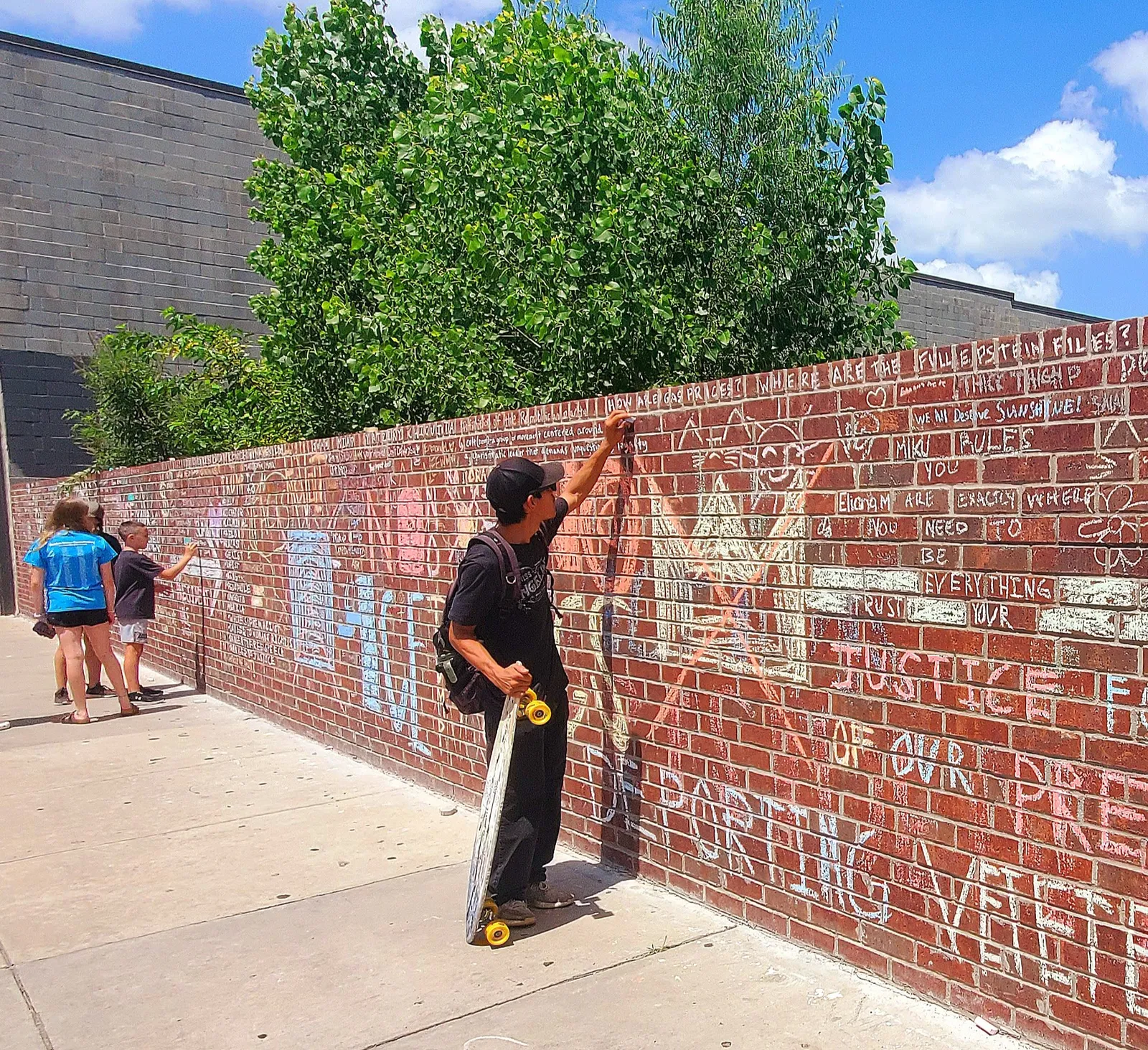
The lot where the Downtown Mini Mall once stood has been bricked in for years. What was once a building is now a wall — blank, inoffensive, and unremarkable. But over the past few months, protestors have turned it into something else: a community art project, a public bulletin board, and a canvas for the city’s political grievances.
Most recently, the wall has become a gathering place for the No Kings movement. Anti-Trump. Anti-ICE. Eat the rich. Epstein accountability.
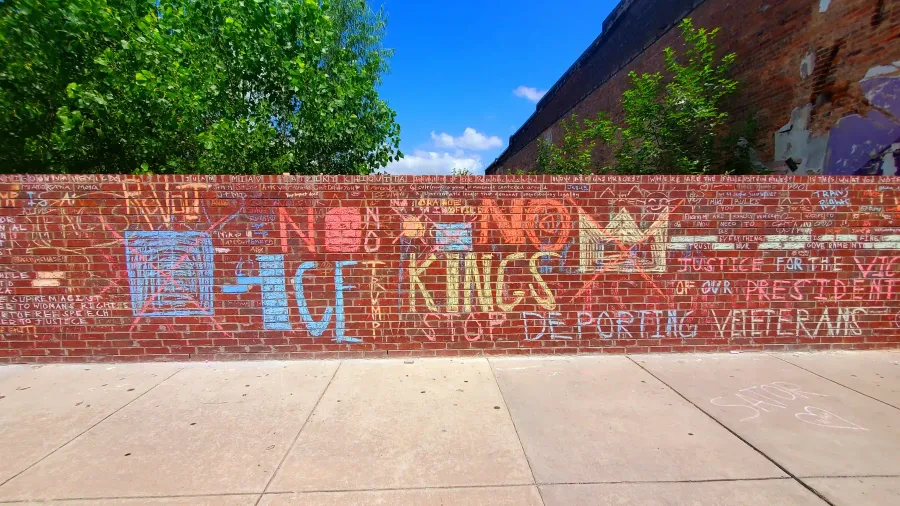
But the wall is more than just a space to protest. Squeezed between the political messages are drawings like ‘Sans from Undertale standing next to 1984’, couples’ initials in hearts, children’s drawings, and of course: so, so many dicks.
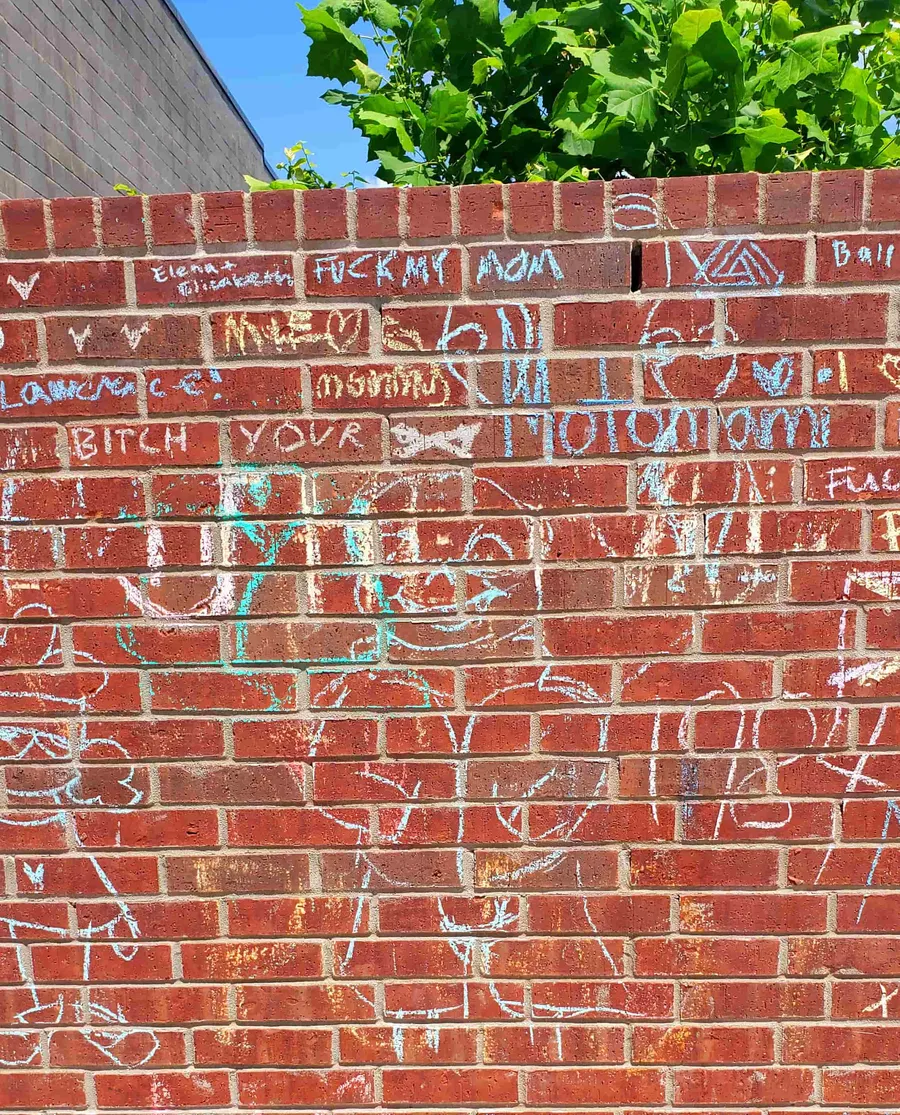
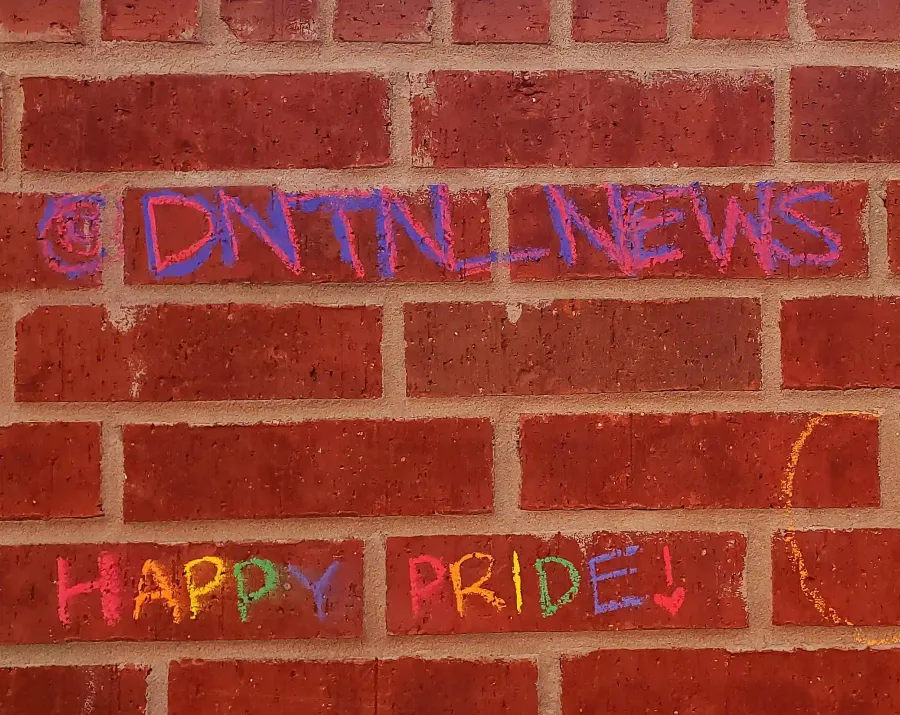
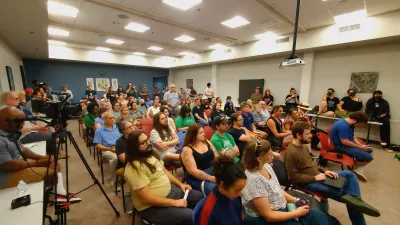
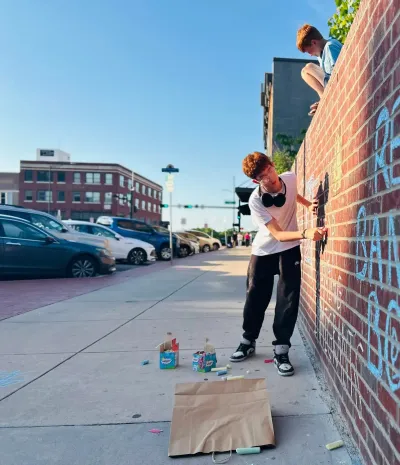
On June 10th, I made the journey to the square to see it for myself. I’d seen it online, and countless times driving past, but nothing compares to taking it all in in-person. The wall was packed so tight there was barely any room left to spare, and artists had begun resorting to the sidewalk or the edges of neighboring buildings. Atop the wall sat small nubs of chalk, left by strangers who hoped to keep the art alive.
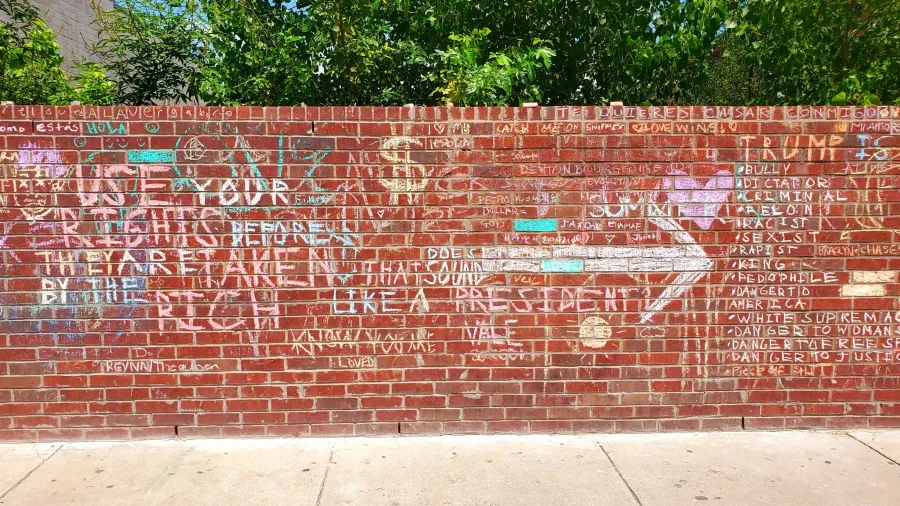
I talked to a college student drawing a small heart that said “Love is Love.” He said he loved the wall: “It just makes the square feel alive. Anyone can participate, from kids to activists to jokesters:
“Memes, politics, people promoting their music, furry art, dick pics - it’s got it all.” he said. “It’s an IRL comment section for political discourse.”
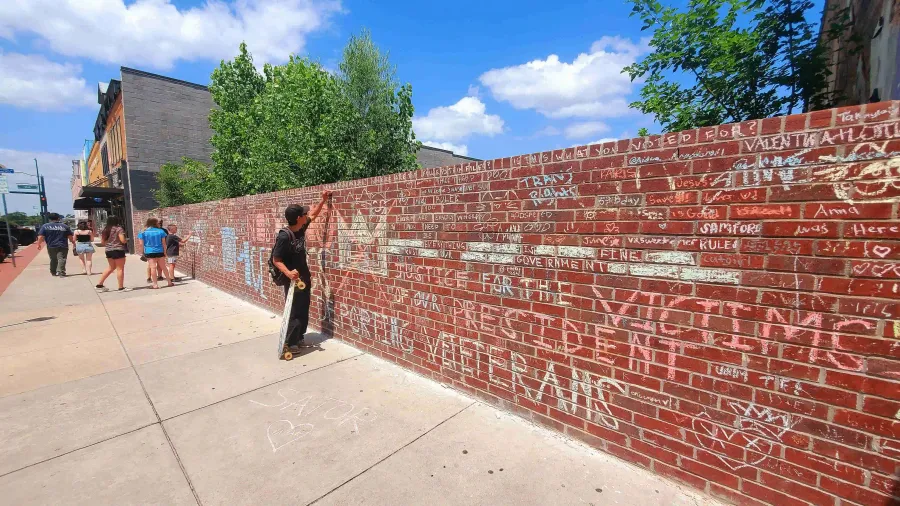
After snapping photos and adding my own slice to the wall, I thought I had finished my report.
I was wrong.
After my interview with Tepani the anti-fascist clown (link), I brought up our city’s protest wall. I told her it felt like the perfect example of “clowning against fascism” — joyful, public, and unafraid to be silly. She agreed, and she wanted to see it.
But when we arrived, the wall was almost empty. Save for a few doodles and scribbles, the wall had been powerwashed clean. This wasn’t the first time. Over the past three months, locals have reported the wall being scrubbed clean, only for the art to quickly return. Wiping the canvas only made room to grow the conversation.
Tepani got to work right away. In full clown costume, she grabbed a piece of chalk and wrote “Clowns over Kings” in bright colors, circling it with smiling clown faces and an upside-down crown. We took photos together. She laughed. And the wall began to fill up again.
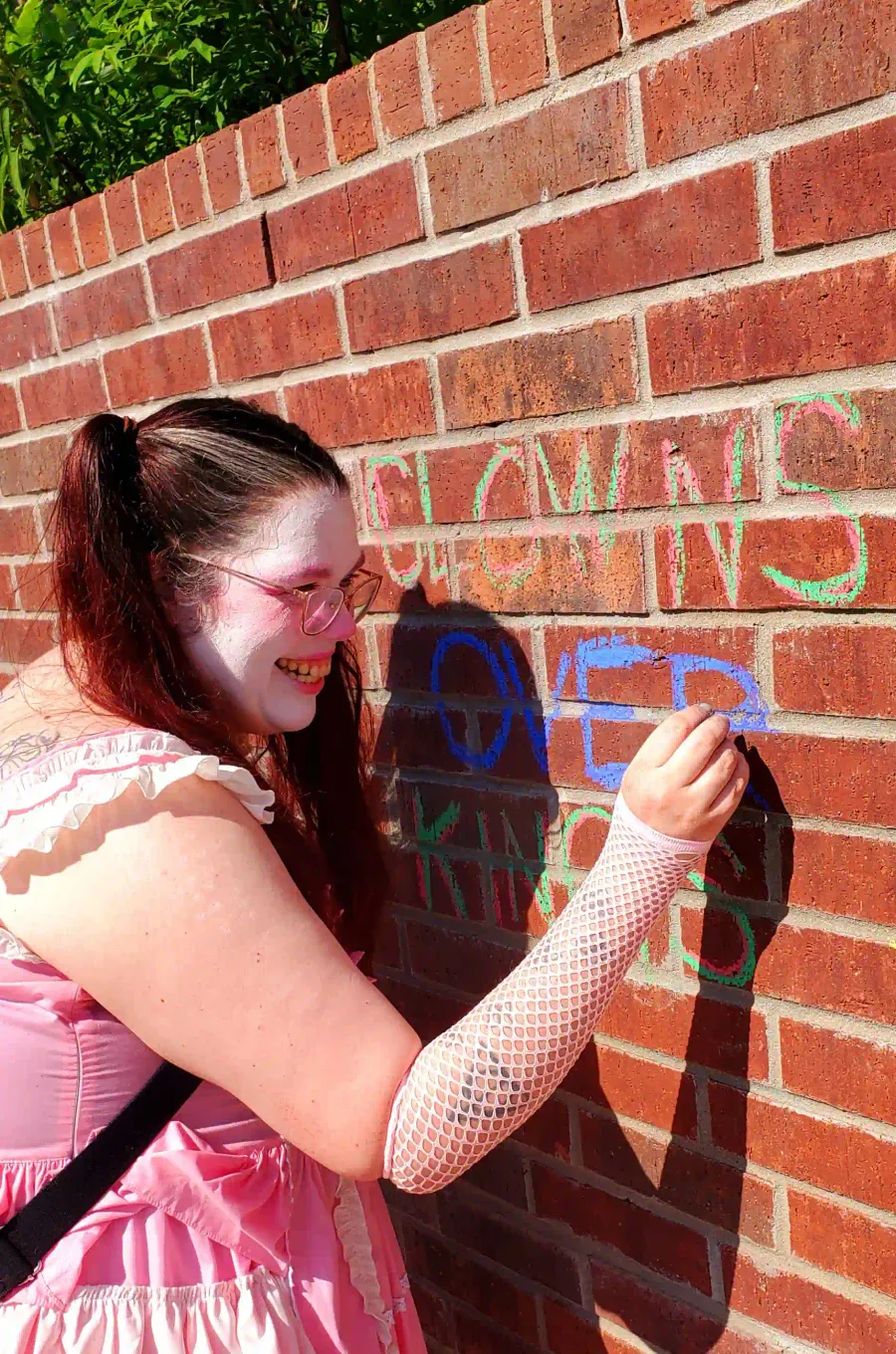
Then we went to Clowns Against Fascism, where we learned about the importance of exactly what we’d just done: protesting fascism with joy, humor, and whimsy.
Inspired, I decided to add to the wall on my walk back. I joined a family writing their names, and I decided to draw an earth surrounded by big hearts. I only got as far as a blue circle before a police officer stopped me.
The officer told us to stop. He said we were committing graffiti. He said the wall was private property. He claimed it had cost $5,000 to clean off the last batch of chalk.
“Why isn’t there a sign?” the family asked. “And how can chalk cost that much to remove? Just wait for it to rain and it would surely wash away.”
The officer shrugged. He said the city was only issuing warnings right now — they were only looking for the people who brought the chalk. He asked if we knew who brought the chalk, but we did not. He picked up the cup of chalk nubs and threw it in the trash.
As the officer walked away, the family and I grumbled together. $5,000 to scrub away chalk? And is it reasonable to press a graffiti charge for something as harmless as chalk?
We reached out to the Denton Police Department to get clarification on the graffiti wall’s enforcement, and this was their response:
“City staff initially notified the property owner about the chalk writing on the wall. Under the City Property Maintenance code, any unauthorized form of writing on private property is considered graffiti, regardless of the medium used. For this reason, cleanup has been provided through the Community Services Department’s graffiti abatement service. The public art policy does not apply in this case.
The Denton Police Department is focused on educating the public that the wall is on private property. To date (7/3/26) no enforcement action has been taken. Denton PD encourages individuals to always seek permission before writing, painting, or otherwise marking private property.“
This email revealed a surprising revelation: The city was the one who contacted the property owner about the graffti, not the other way around. Furthermore, it is city services that provided the cleanup operation.
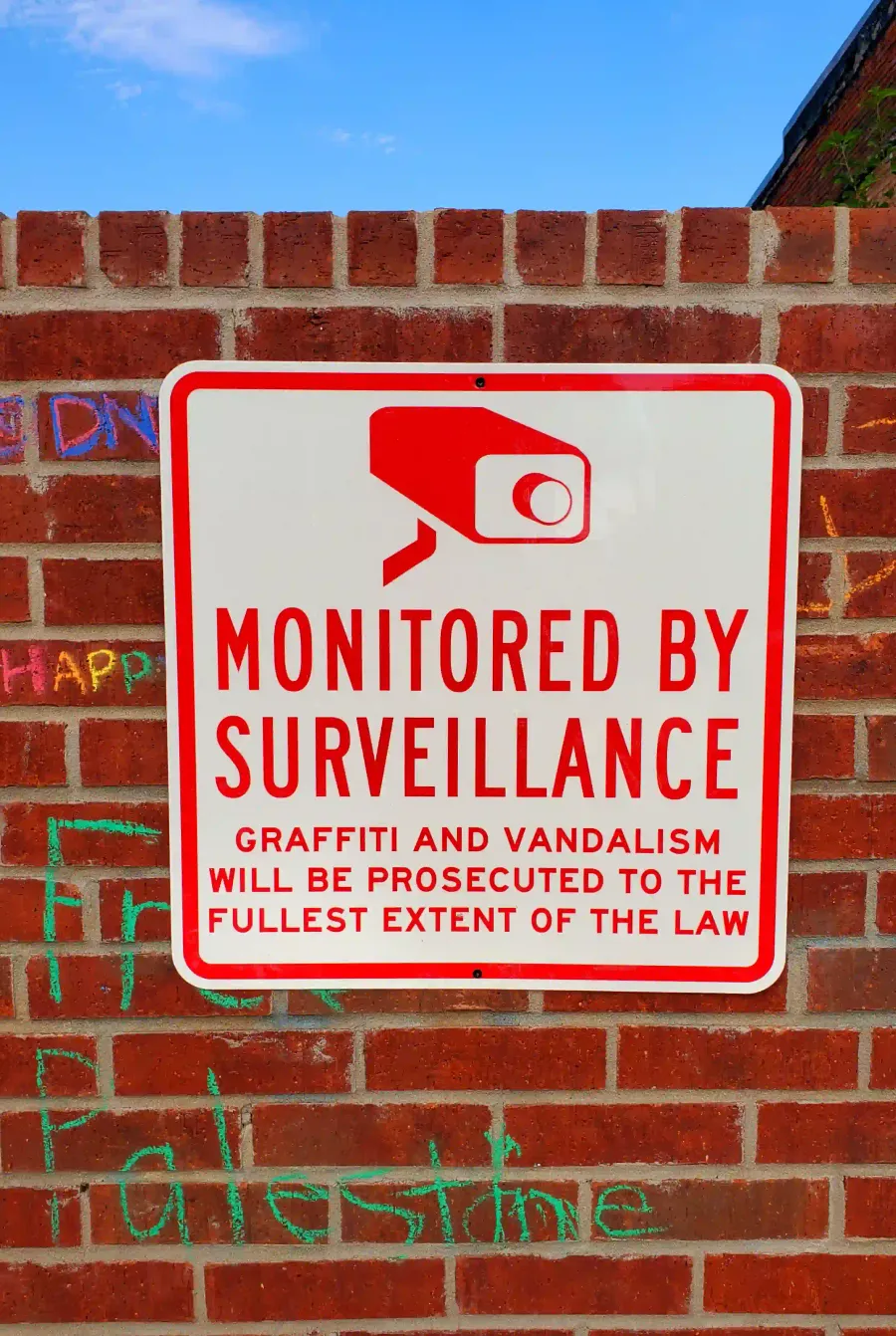
A few days later, a sign appeared on the wall: “Area under surveillance. Graffiti will be prosecuted to the full extent of the law.” Opposing the wall now sits a camera, perched on a city sign — waiting to make good on its promise.
After my interaction with the police, I contacted Tepani. I let her know that the photos we took, unbeknownst to us, depicted us doing something the city considered illegal.
But instead of cowering away, Tepani doubled down - her anti-fascist message manifesting in her actions.
Like all good political commentary, these photos weren’t meant to be hidden, but shared. Boldly posting anyways, Tepani writes on her Instagram:
“There’s so much to say about the Clowning Against Fascism Workshop yesterday, but I just don’t think I can put all my joy, gratitude, and love into words.
So instead, I’m going to practice what I preach and take accountability by publicly sharing how my clown fought fascism yesterday.
And if my art, that can be washed off with a pitcher of water, gets so much attention that the Denton police uses public resources to track me down so they can fine me — then so be it!
Because at the end of the day, who is the bigger clown? The woman dressed up as a clown creating silly art on the wall — or our public safety officers using our taxes and their limited resources to punish her for putting chalk to the wall?“
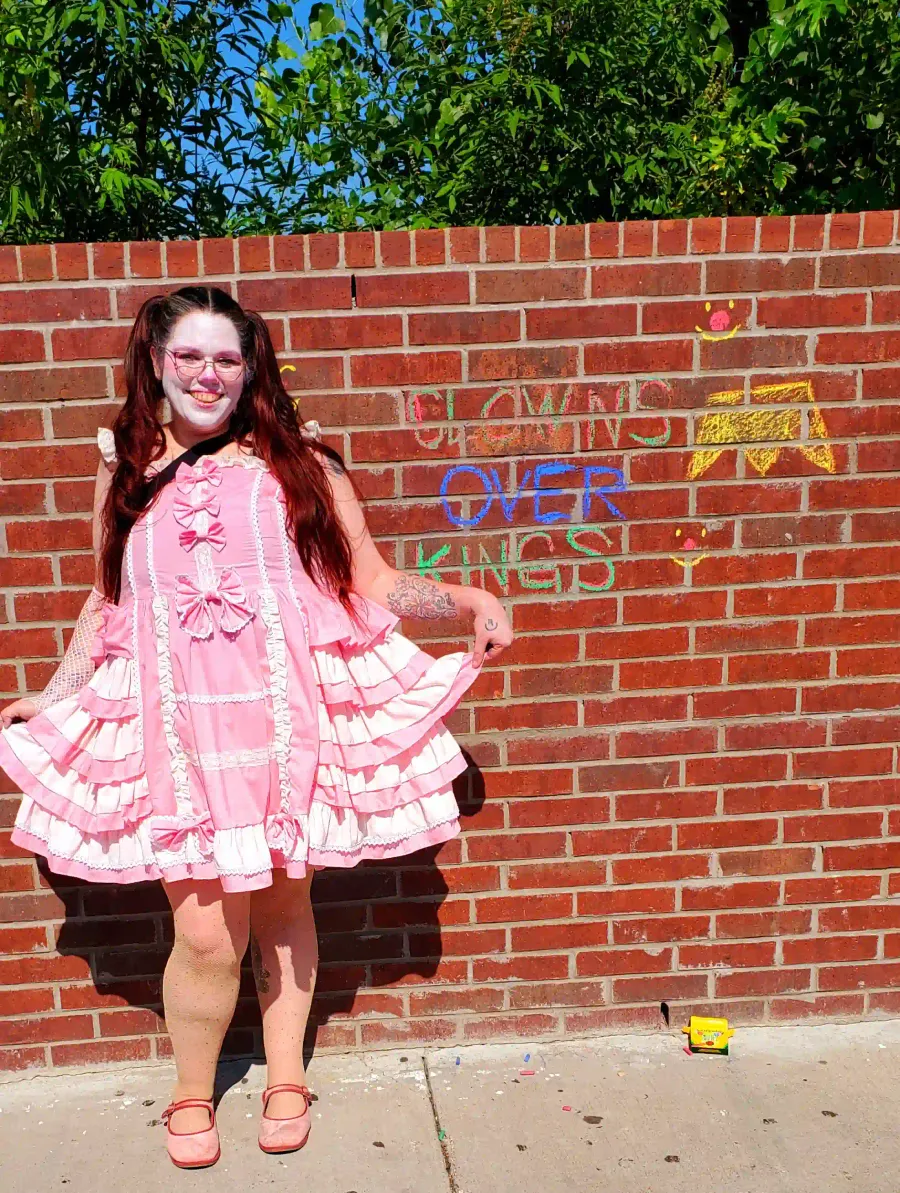
She ended with the hashtag, #ClowningAgainstFascism.
Sure, technically the wall is on private property. The owner has a legal right to control their wall. But that doesn’t feel like the whole story.
Is it a coincidence that the political nature of the wall — and its constant erasure — mirrors the suppression of criticism towards the people in power?
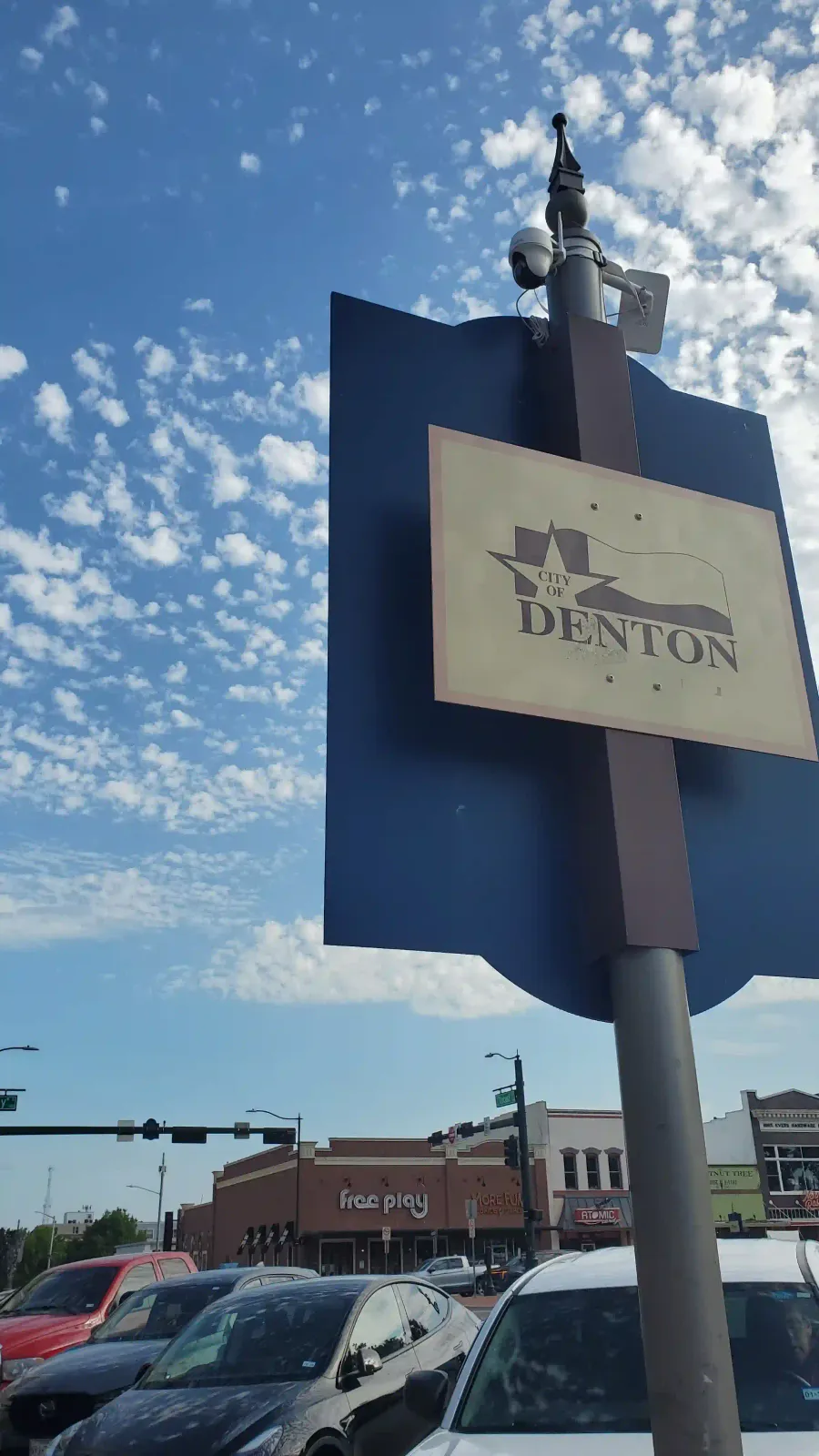
When community voices aren’t heard online, activists take to the real world. They find space, make art, use chalk. Any medium that can hold their words.
When the people in power try to suppress our voice, it always springs back up in the most unlikely places — like defiant weeds growing through concrete.
No matter how many times they’ll powerwash the wall, the message of resistance remains.
#CantWashItAway