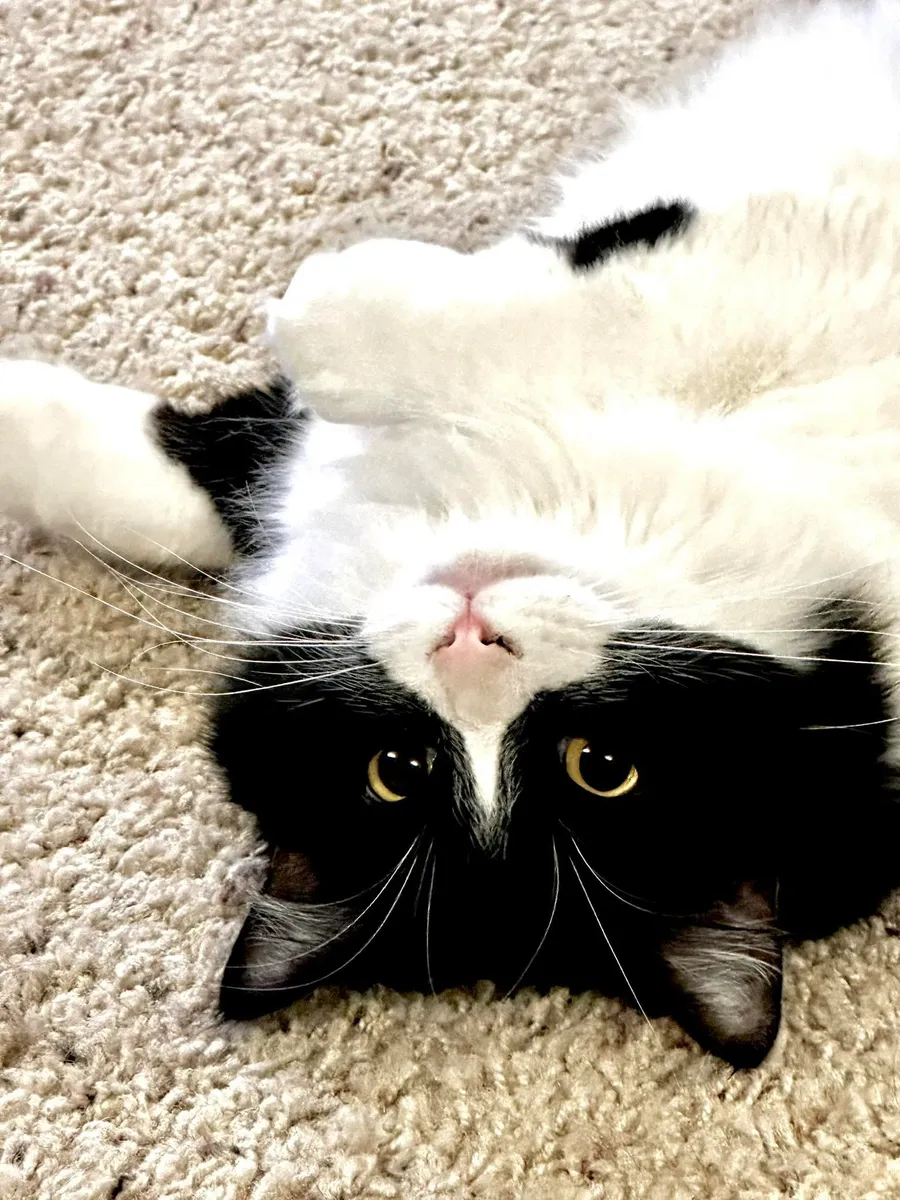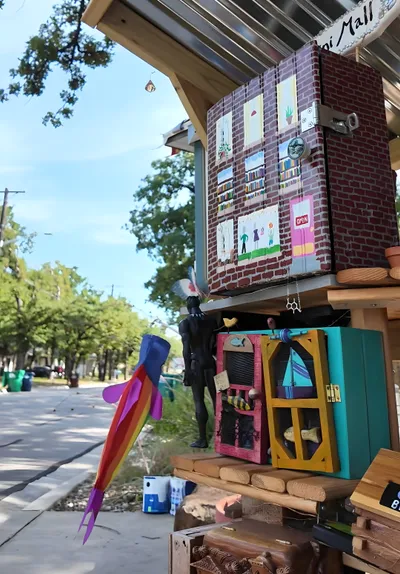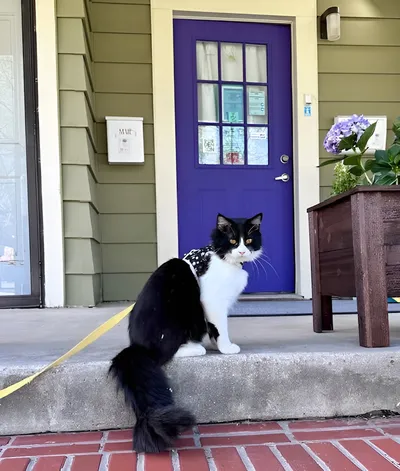



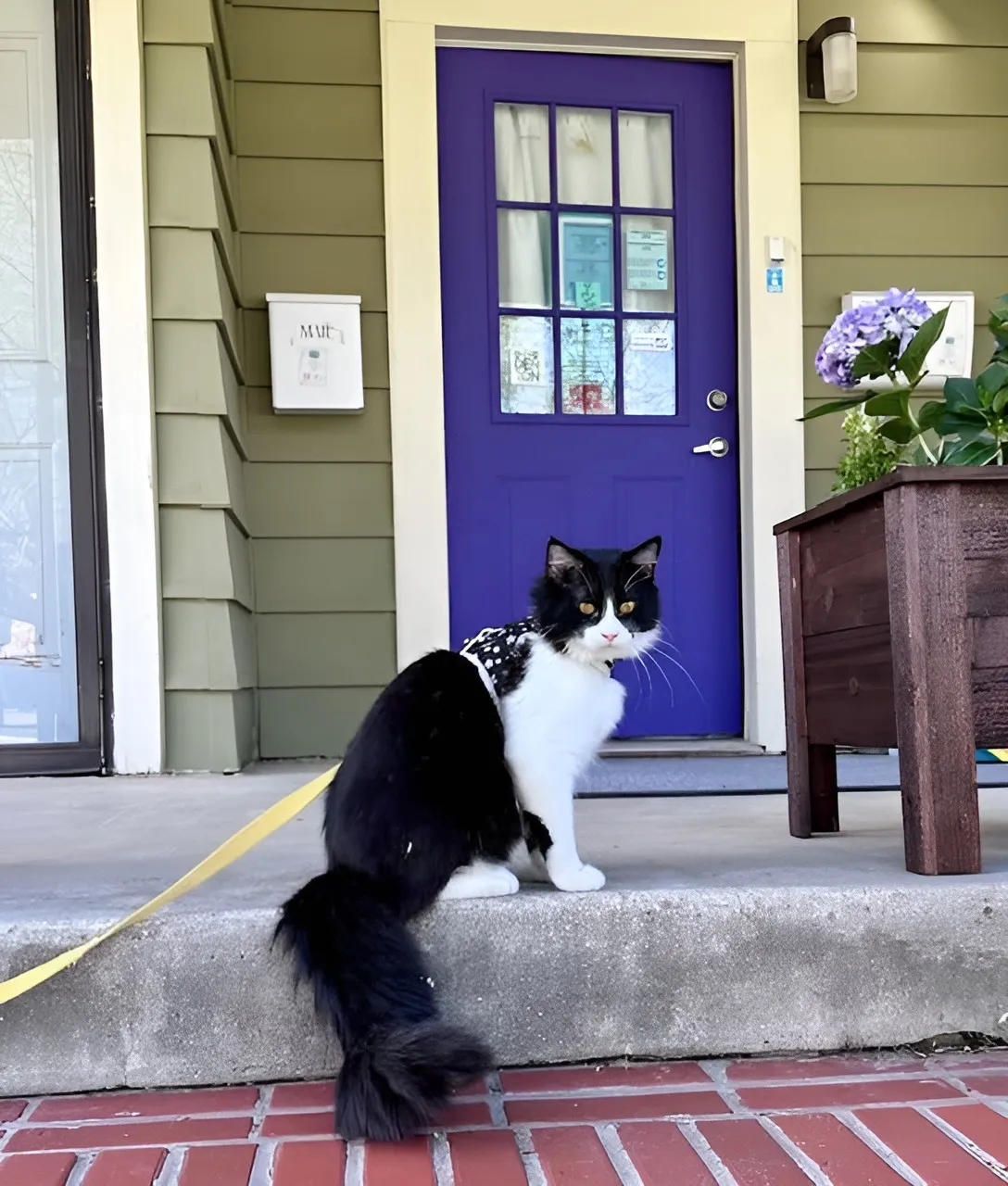
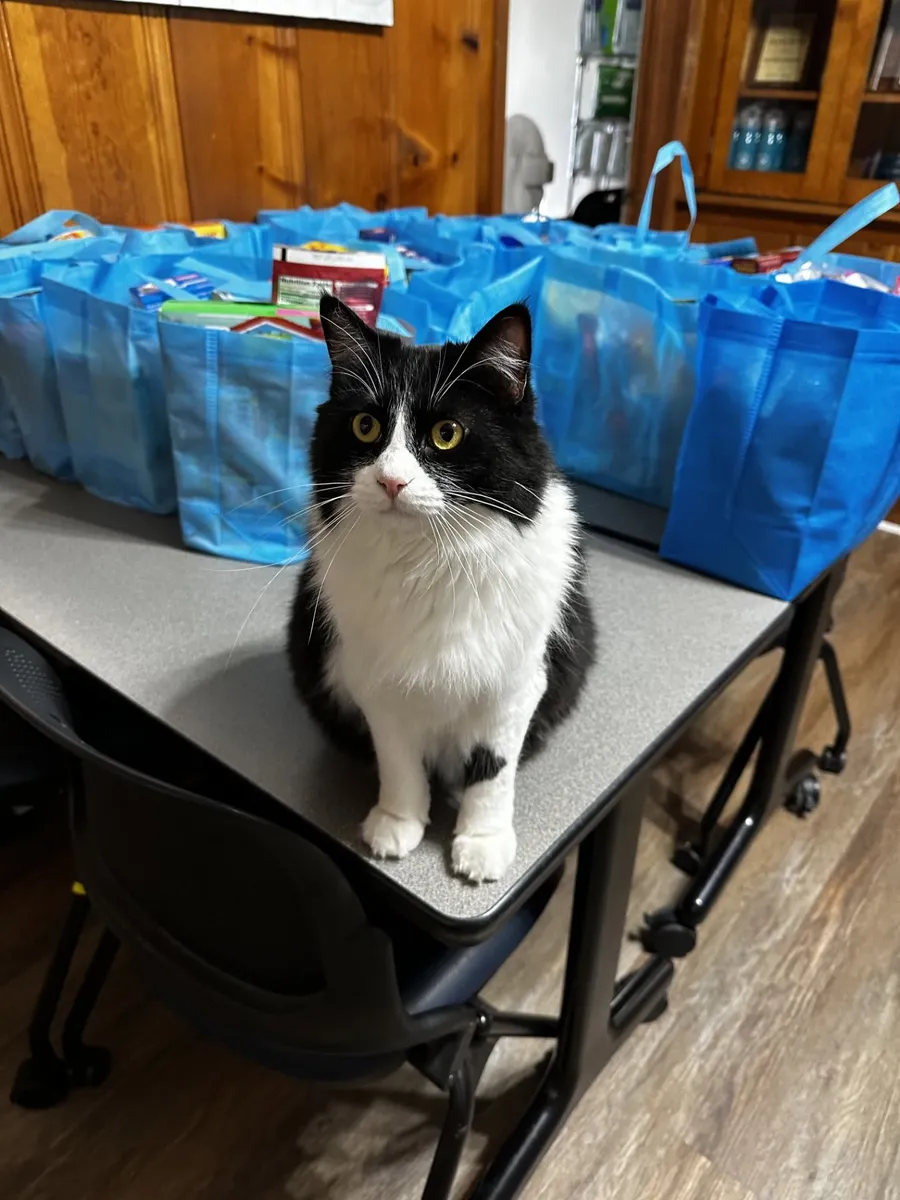
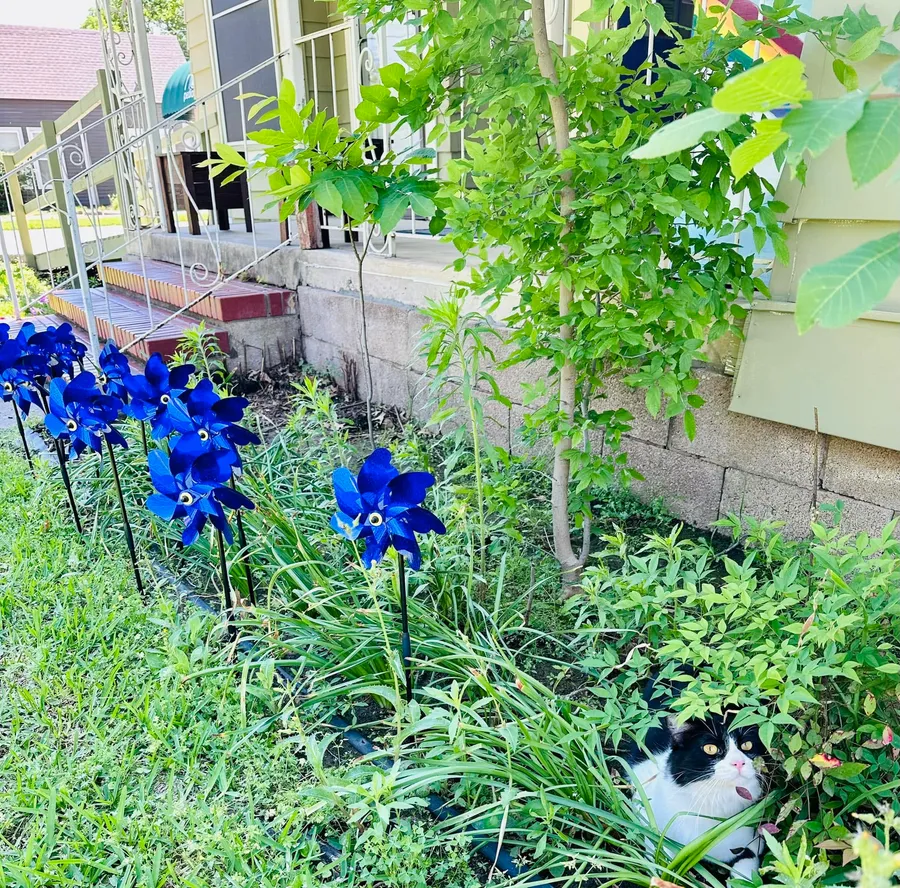
Nothing about the entrance to Interfaith Denton looks like a support office — it has cheerful hanging flowers, silly decorations, and, most famously, a bright purple door. Step inside and you’ll be greeted with a space that feels more like a living room than a waiting room: a fireplace, bright blue walls, and local artwork covering nearly every surface. The homey feeling is intentional. Interfaith Denton’s office is actually a remodeled house, and they make sure it still feels like one. What really completes the home feeling, though, is Oliver — a tuxedo cat who has, by all accounts, fully claimed the place as his own.
It doesn’t feel like an office. It feels like somewhere you’d want to sit down, be welcomed as a person instead of a case number, and pulled into a community that has your back. And yet this same warm little house hands out hundreds of thousands of dollars in assistance a year.
No Ask Too Small
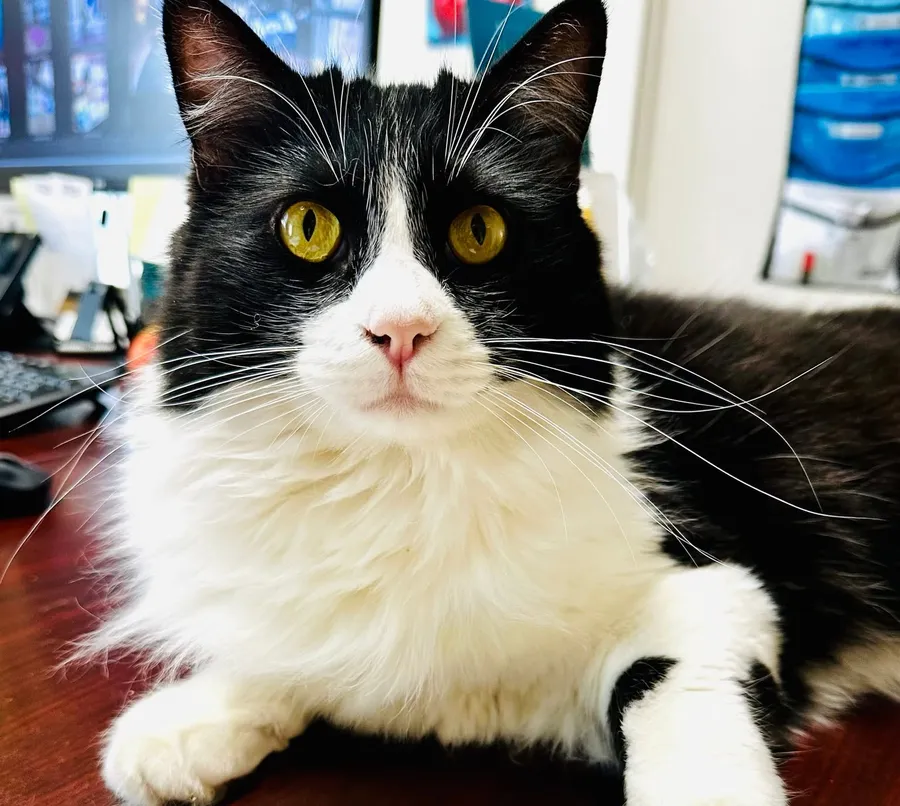
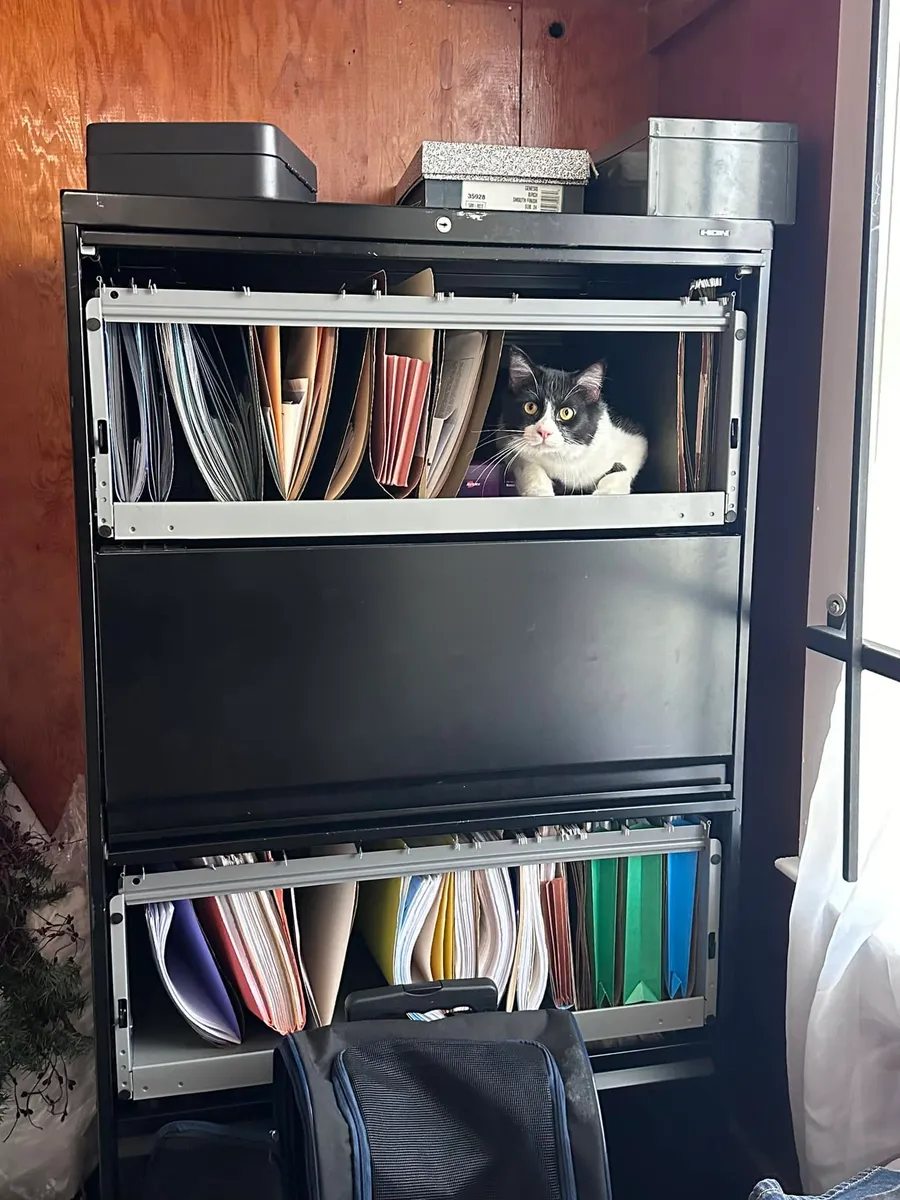
Officially, Oliver’s title is CFO — Chief Feline Officer. Unofficially, that means he’s usually asleep on a stack of intake forms, filing them the only way he knows how (sleeping on them, mostly). He turns up in half of Interfaith’s own photos: perched on a mountain of donated diapers, parked in an empty desk chair, or supervising from the doorway. Officially he’s the Interfaith mascot, and even has his own zine. It’s a small thing, but it says something real about this place — nothing about walking through that purple door is supposed to feel clinical, embarrassing, or like a last resort.
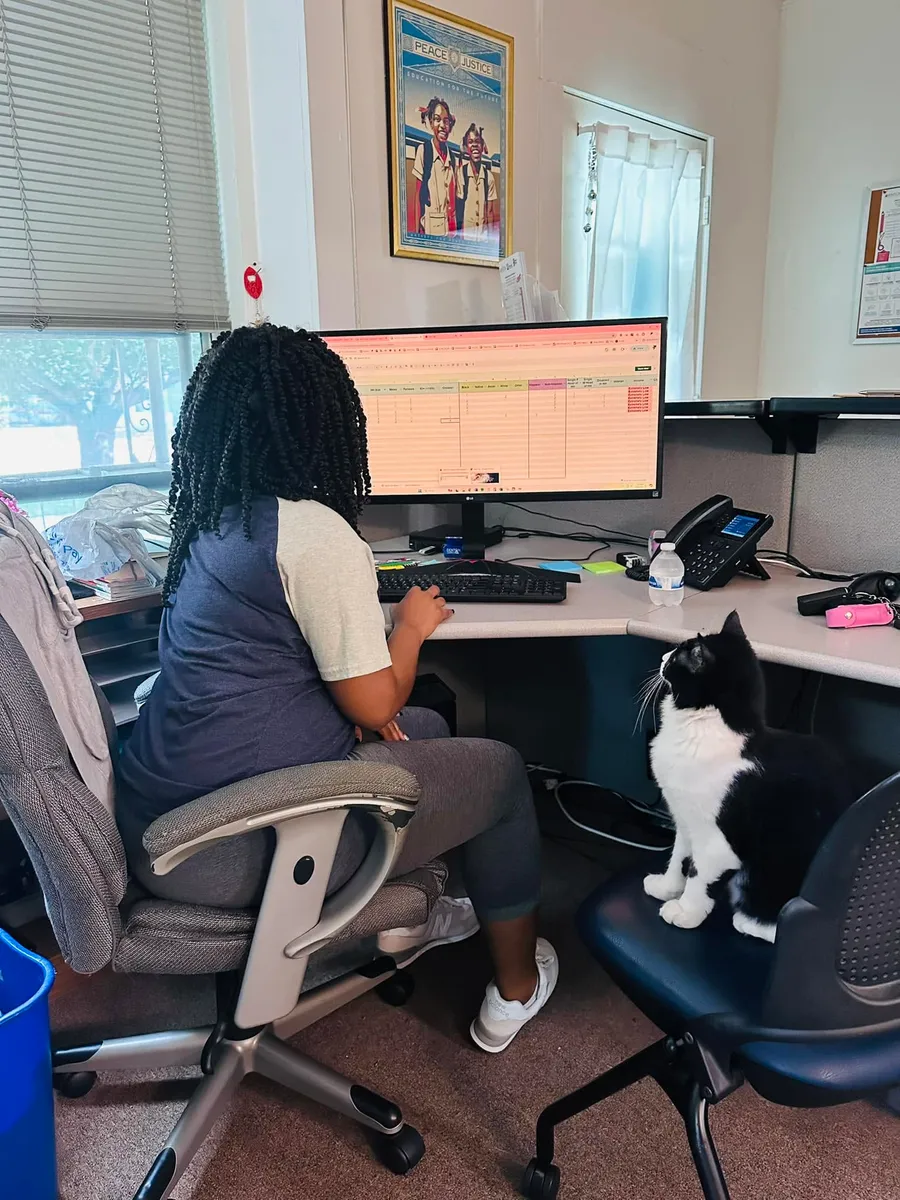
That matters, because the biggest thing keeping people from calling usually isn’t eligibility — it’s the assumption that asking for help is a bigger deal than it actually is.
But Interfaith isn’t only focused on “big” asks — they specialize in the small ones too, and they see firsthand the large impact of a little help. At Interfaith, “a little help” can look like a lot of things: pads and toiletries picked up once a month so a paycheck stretches a little further. Energy efficiency kits (like caulk, timer switches, and LED lightbulbs) given to reduce your energy bill. A reduced cost bus pass to help you navigate rising gas prices. Small pockets of savings that can provide community members with breathing room, and the opportunity to direct money elsewhere.
“Someone might come in and only want toiletries for the month,” says Keri Caruthers, Director at Interfaith Denton. “Soap, deodorant, toothpaste, and the like. It sounds small, but that could be $30 a month in savings, which is $360 a year. That’s a real impact.”
Sometimes the asks are bigger, like getting an electric bill paid down before it becomes a shutoff notice, furniture for those in need, or getting referrals for larger support. Interfaith Denton treats both asks the same way — something worth showing up for. Everybody needs a little help sometimes, and the size of the ask has never mattered here. They just need people to trust in the work, and reach out for help when they could use the support.
“Everybody needs a little help sometimes,” Keri adds. “We have the funding. It hasn’t run out. We want to encourage anyone who could use a little help right now to reach out — come in for an appointment and we’ll walk you through what’s available. It’s our job to distribute the resources. Your only job is to ask.”
There’s No Strings Attached
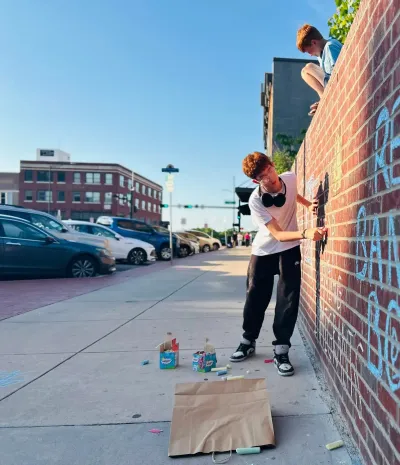
Back in the spring, a family of four danced out of the Denton Senior Center holding balloons. One of our staffers, walking past on the way to a community cleanup, stopped to ask what the celebration was about. Atmos Energy had just cleared an overdue bill of over $800, and clearing that debt meant they could finally move into a bigger apartment for their kids. After receiving the help, they were beaming.
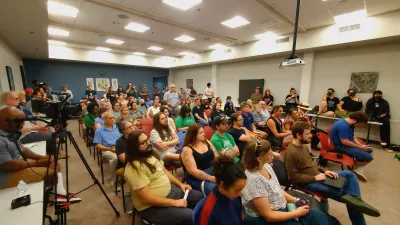
That family was one of more than 300 households helped through an Atmos Energy bill-pay event Interfaith Denton ran this year: over $88,000 in energy bills paid off, plus 75 energy efficiency kits handed out on top of it. When Interfaith Denton posted about it, though, the comments section didn’t believe them — several people called the event fake, or some kind of setup. It’s an understandable reflex; free help at that scale can sound like a scam.
“We live in a society where truly free help is rarely given, so sometimes we’re met with hesitation,” Keri says. “It’s why community outreach is so important to our work — we want people to know we’re here to help, no strings attached.”
What Breathing Room Actually Looks Like
Interfaith Denton can help with energy bills through Denton Municipal Electric, TXU, and Atmos — bring a current bill and meet the income requirements, and they’ll help pay it down. That alone can be the difference between a manageable month and a scramble.
Need to get to work and money’s tight for gas? Go Zone and bus passes are available free or at reduced cost — cheaper than buying them through the city directly. It sounds small, but shaving a transportation cost off a tight month is sometimes exactly what makes rent possible.
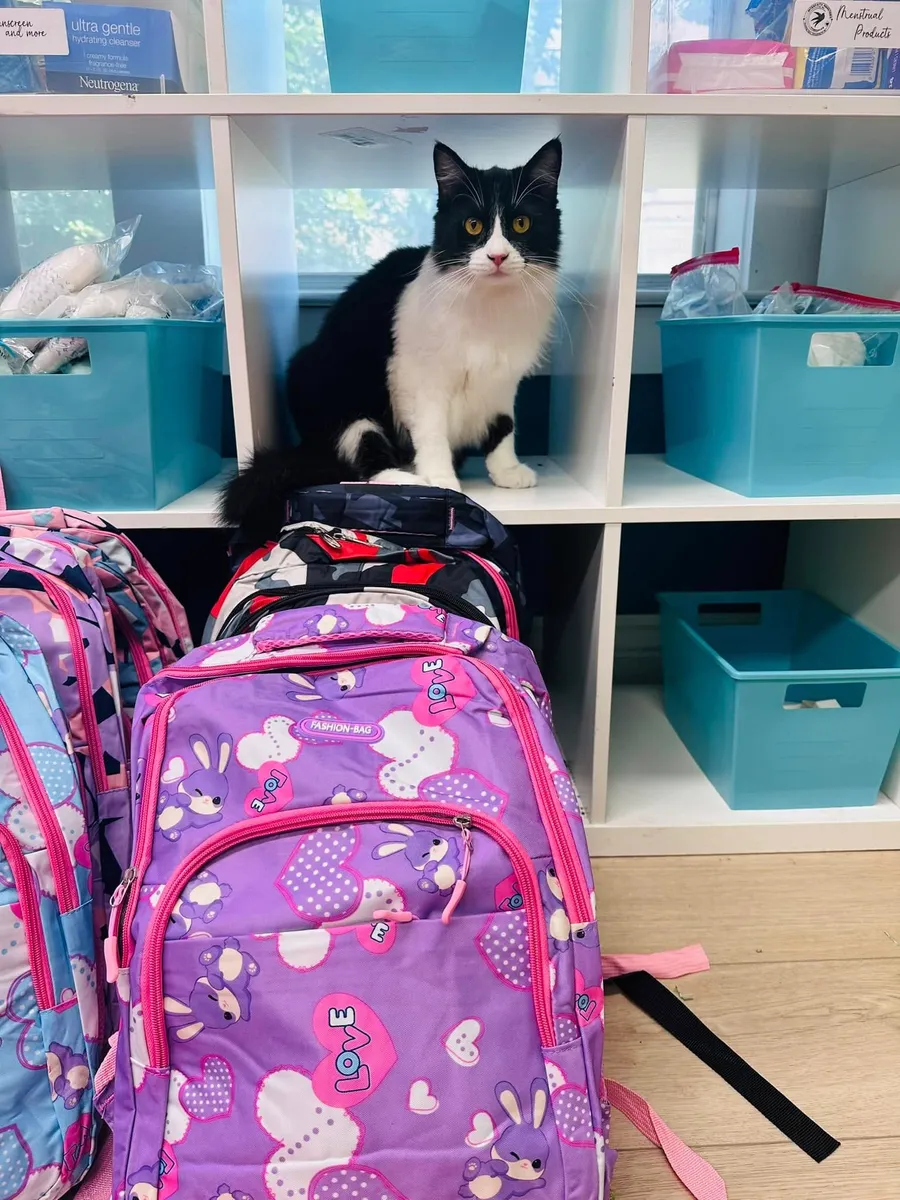
Then there’s the household stuff nobody budgets for until it’s suddenly a problem: soap, shampoo, conditioner, pads, diapers. Interfaith Denton keeps a stocked supply closet for exactly this (and it’s usually got a cat asleep on top of it). The best part? You don’t even need to fill out a form to qualify for household goods. Just walk in, let the front desk know your needs, and they’ll be happy to help you — no questions asked.
One story that stuck with staff: a mother who qualified for diaper assistance — available up to six times a year — said it freed up about $50 a month she’d otherwise have spent on diapers, money she could finally free up for other purchases during a hard stretch. After seeking services for diapers, she was introduced to the free toiletries, which allowed for even more savings. It sounds small at first, but the impact is real — this is the kind of work that gives families breathing room during a hard stretch. Multiply a “little help” over months of service across hundreds of families, and you see why Interfaith takes even the small asks seriously.
Who’s Actually Paying For This?
“Interfaith Denton’s name can be misleading,” Keri says. “We’re a coalition of organizations united to support the community, and above all we have faith in the mission. You do not have to be religious or follow any creed to receive help. We are open to all races, genders, sexualities, faiths, and backgrounds. What matters most to us is your needs, and how we can best support you.”
It’s worth knowing: churches make up just 3% of Interfaith Denton’s funding. Individual and community donations account for 14% — a real testament to a community showing up for its own. And you don’t need to belong to a specific faith — or any faith at all — to receive help. Interfaith Denton’s coalition includes traditional congregations alongside places like Bewitched, Denton’s local Magick store, as one of the many participating organizations. Their strength comes from many backgrounds coming together, united over the mission to uplift Denton’s community.
Let Them Decide If You Qualify
You may think you don’t need help because you’re not in an emergency. That’s exactly the assumption Interfaith Denton wants to correct. Their resources exist for the in-between moments too — the ones where a bill, a tank of gas, or a bottle of shampoo is the thing standing between a tough month and a better one. It’s their job to figure out if you qualify. Yours is just to ask.
And if you’re reading this and you’re genuinely doing fine right now — good. Keep this in your back pocket anyway, and pass it along to someone who might need it. The easiest way this community takes care of itself is by making sure people actually know what’s available to them. To break down the stigma of asking for help, and shifting the narrative on what community support looks like. Awareness of Interfaith’s work just might be the difference somebody needs.
Connect: interfaithdenton.org // @IFMDenton
Contact: interfaithdenton.org/contact
Support the Mission: interfaithdenton.org/give
Reporting based on an interview with Keri Caruthers, Director at Interfaith Denton.