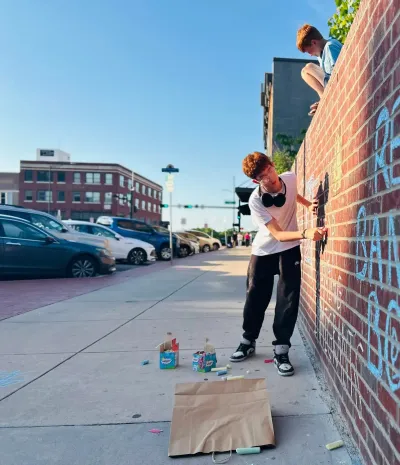



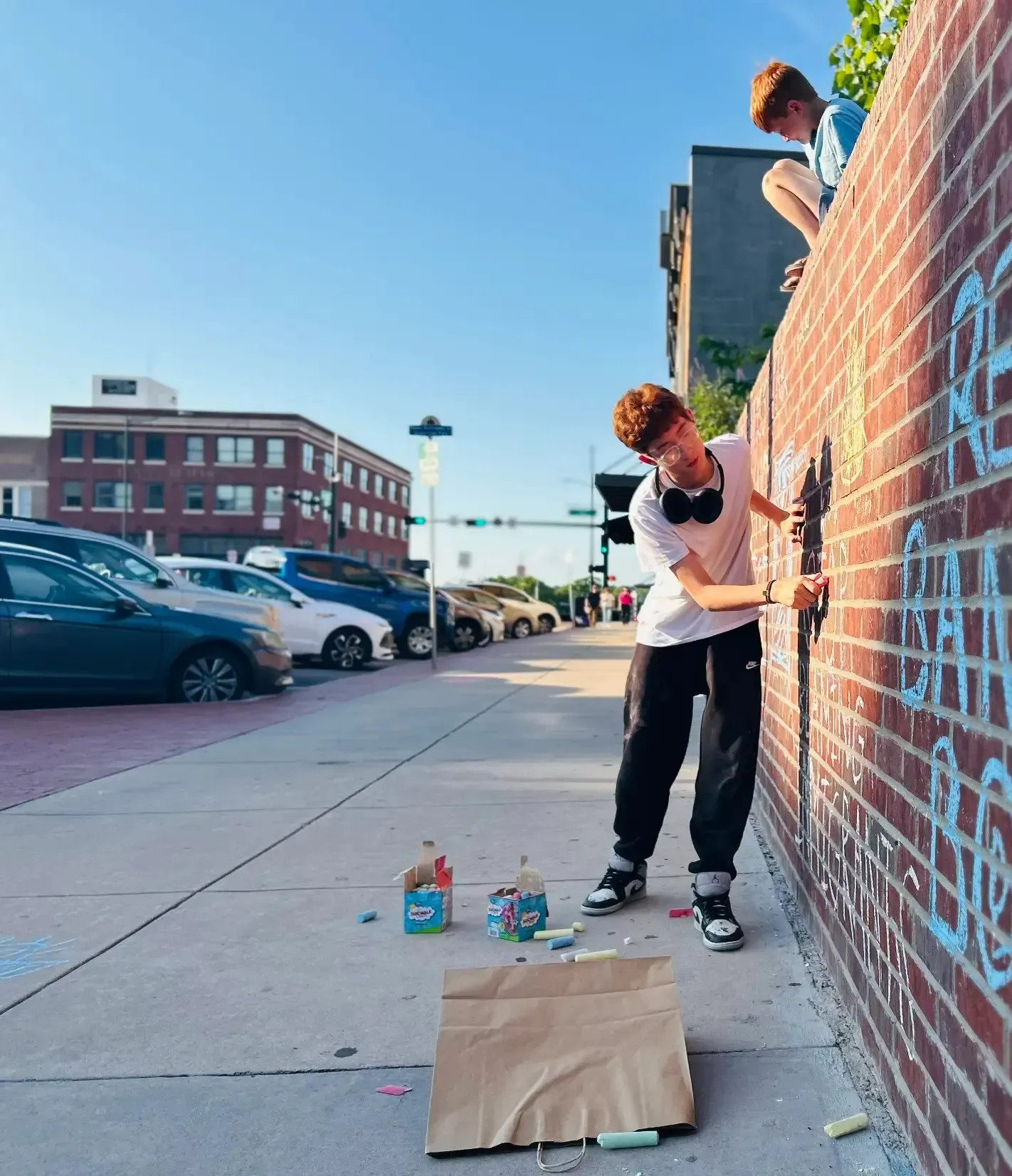
The first time police approached Luke Safarli, he was kneeling on the pavement, a stick of blue chalk in his hand, tracing the message “READ BANNED BOOKS” on the wall.
He wasn’t hiding. He wasn’t spray-painting. He was simply contributing to the community art project he’d been nurturing for weeks.
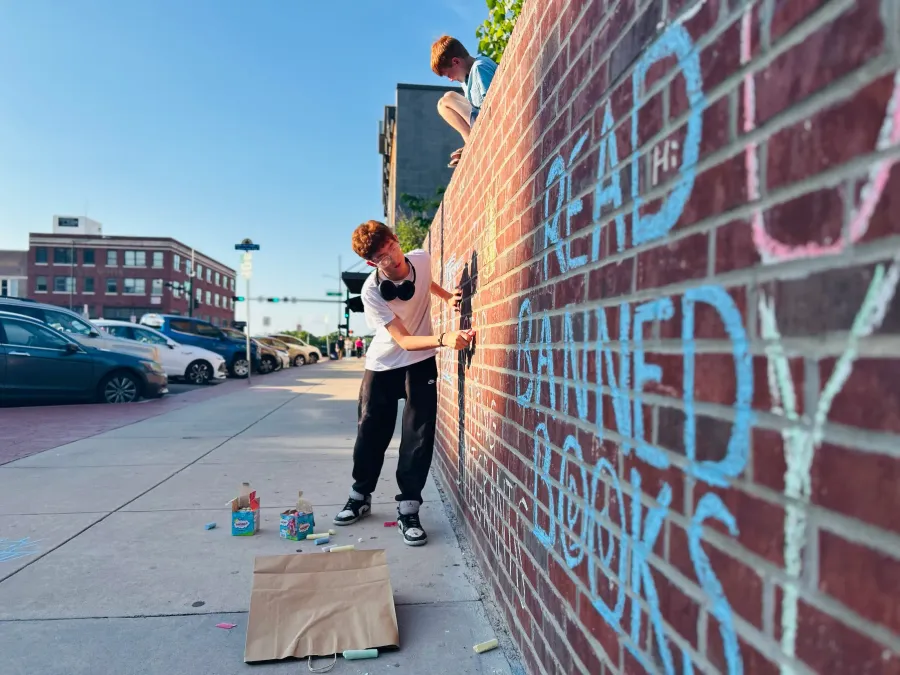
The officers approached Luke and his mom saying an older woman had reported a teenager with spray paint marking on the wall. When Luke showed them the chalk, they weren’t surprised. The “chalk wall” has been a hot-topic issue in Denton for months — activists cover the wall with messages while the city washes it away, a game of cat and mouse they’ve been battling for weeks.
The officers didn’t cite him. Instead, they offered a warning: “We understand the chalk is impermanent, but the city still considers it graffiti. You’re going to have to find a new way to share your message.”
For Luke, a 14-year-old from Corinth, that moment crystallized everything he’d come to suspect about Denton’s response to his accidental project: The city isn’t fighting graffiti. It’s fighting a message.
An Accidental Activist
Luke didn’t set out to start a movement. He just forgot his sign.
March’s “No Kings” protest on the Square was his first-ever political demonstration. With his family busy and his friends far away, he showed up solo — armed with nothing more than his emerging curiosity for politics.
“I saw so many creative signs and costumes. When I realized I brought nothing, I felt kinda left out. They had a table for free posters, but I wanted to do more.”
He spotted a blank wall — an unused brick surface where the old Mini Mall used to be—and had an idea. He bought a $5 packet of chalk from the toy store and wrote two words: “NO KINGS.” He taped a few free signs to the wall, left the chalk on the ground, and rejoined the protest.
“I figured someone else might want to contribute — maybe they forgot a sign too.”
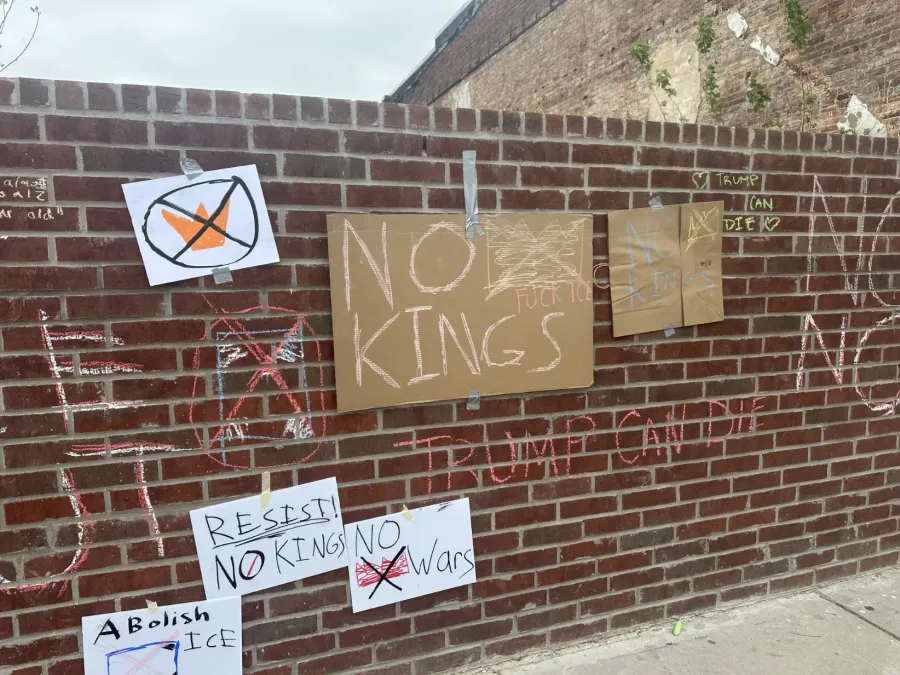
A week later, he returned, unaware of the movement he’d started. The wall was covered with dozens of messages in different handwriting, different languages, and different voices. What was once a blank wall now lived as a community bulletin board.
The City’s Selective Enforcement
Now, Luke bikes an hour each week from Corinth to replenish the chalk, check on the artwork, and redraw messages washed away by rain — or by city services.
But on a recent visit, he found something new: official city signs prohibiting chalk art, and a surveillance camera pointed directly at the wall.
“I was devastated,” he says. “This thing everyone’s been rallying around—they’re trying to take it away. And it’s all because it’s political. The complaints people make aren’t to stop my graffiti, but to stop the message.”
The interesting part? Denton PD’s media relations team relayed to us that the private property owner isn’t the one initiating or funding the chalk’s removal. The city reached out first, and the removal is handled by the Community Services Department’s Graffiti Abatement Team.
Luke’s little brother noticed something as he walked to our interview: A long red line on the Recycled Books mural, as if someone dragged spray-paint across the art. Recycled Book’s staff claimed it’s been there for months, unaddressed by city services. Despite it being private property with permanent graffiti damage, the city has ignored it.
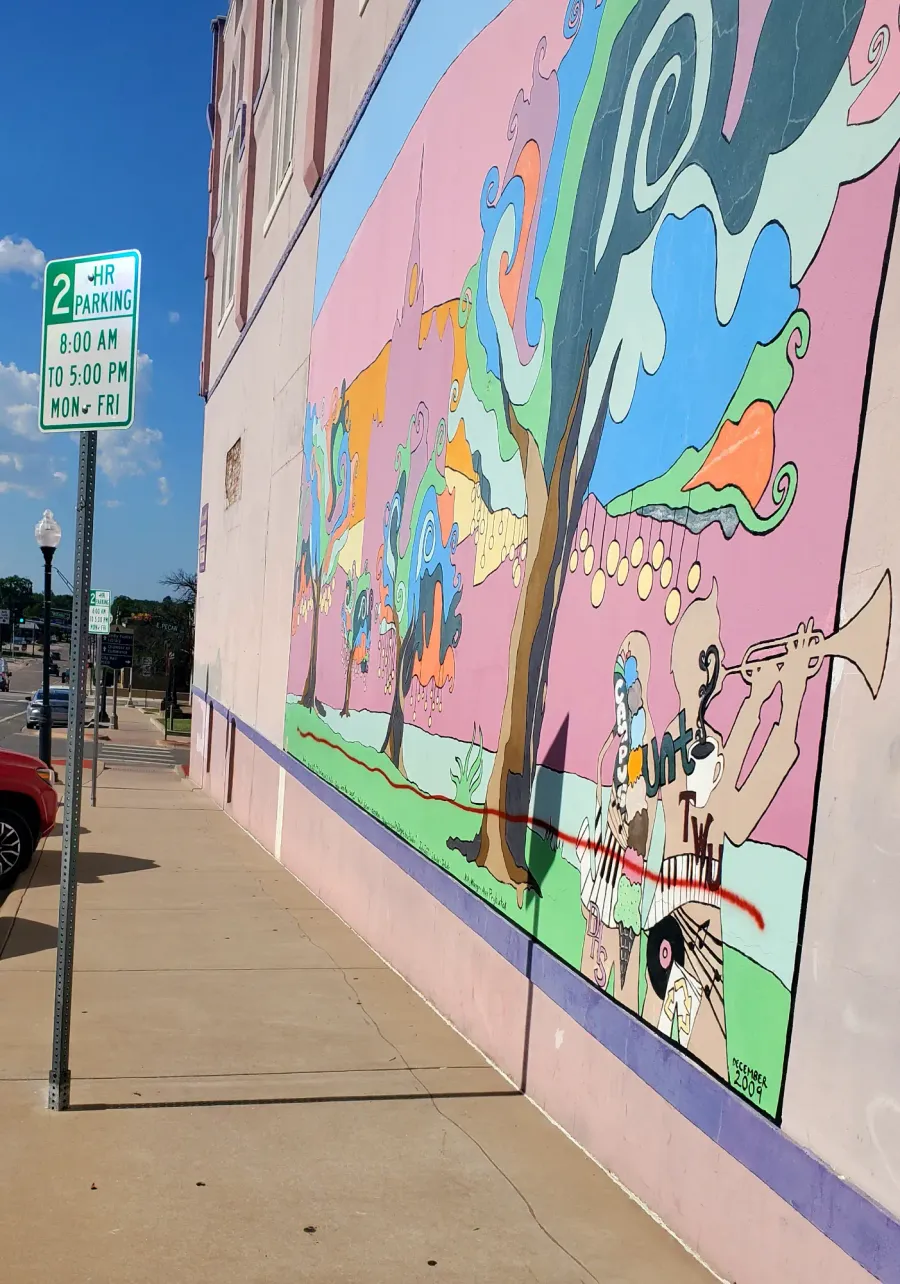
“Why are we spending $5,000 on removing chalk, but not on public art people actually want fixed?” Luke asks. “Is there a political agenda here?”
Luke counter-protested the wall’s signage with malicious compliance. Not touching the private wall now covered in signs, he moved his artwork to the ground.
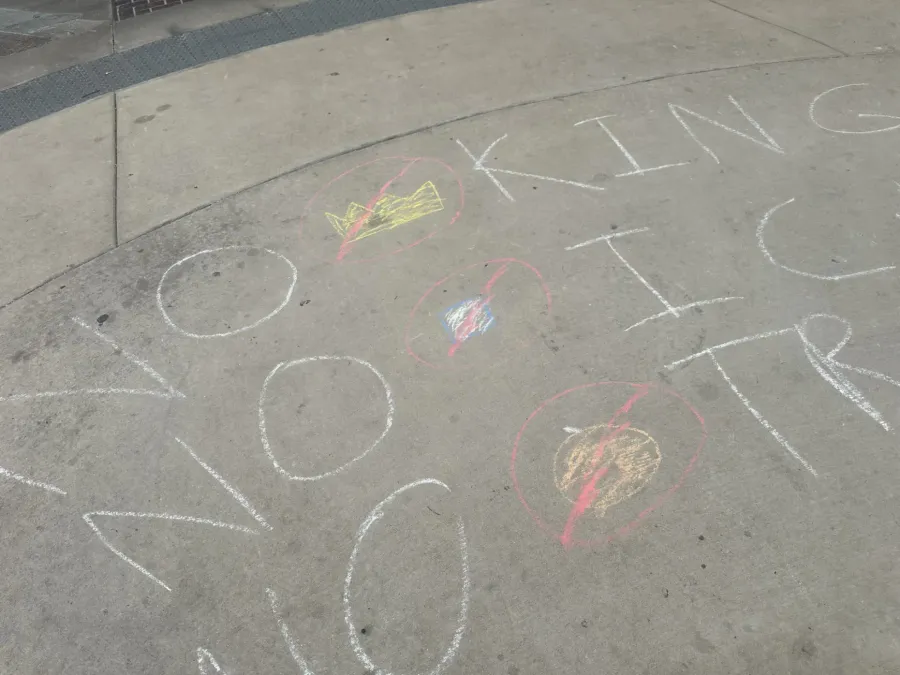
“If you want to fine me, you’ll have to fine EVERYBODY who drew on the wall — and there’s hundreds of us.”
The Purpose of Art in Activism
Luke loves visiting the wall each week and sitting with the messages.
“There’s something so great about just sitting with the messages and letting them hit me,” he says. “I think about who wrote them, and where they are in our community. How many people contributed. It’s always an amazing experience, and it’s different each time.”
He reflects on art’s role in activism:
“It’s a silent space between the emotional noise of argument. Art simply presents us with an idea. People can sit with it silently, and take it in however they like.”
His mom adds:
“Politics weren’t something families were allowed to discuss when I was young. It was taboo. The wall is a great way for families to begin the political conversation in a gentle and accessible way— whether you agree or disagree with the messages.”
‘A Privileged Take’
The wall has drawn critics, too. Online commenters have argued the Square isn’t a place for politics— that Luke should “draw on his own driveway.”
He pushes back.
“To not want to see political messaging is a privileged take,” he says. “The solidarity these messages provide is important. When people walk by and see the diversity of handwriting, they can feel the community supporting them — even if they aren’t there in the moment.”
He continues.
“All of life is political life. To say politics doesn’t belong in our community is to say you don’t want to be bothered by the inconvenience. The people impacted by The Big Beautiful Bill, food stamps, ICE — they don’t get the choice to ignore it. To erase the chalk wall is to rob them of solidarity.”
‘I’m Always Happy to Talk’
Despite the surveillance and threats, Luke hasn’t stopped.
“Sometimes people stop and ask what I’m doing, and I’m always happy to talk. I’ve learned a lot getting to talk to people about politics, and I hope others can learn something from me too.”
“The point of the wall is to start conversations, not shut them down. Sometimes people stop and ask me what I’m doing, and I’m always happy to talk to them. I’ve learned a lot getting to talk to people about politics, and I hope others can learn something from me too.”
Being just 14 years old, Lucas knows he has a lot to learn. From the nuance of political debate to the diverse range of perspectives a person might hold, it’s an overwhelming topic for anyone to take on.
His advice for young people?
“Don’t be afraid to talk to people. And even more importantly — don’t be afraid to make mistakes. I used to be afraid of saying the wrong thing, or looking dumb in front of others, but I learned that fear only kept me silent. When I realized good political conversation is about learning from one another, I began to grow more confident. I’ve made so many mistakes along the way, but it’s okay — we all do. What’s important is that you just show up with an open mind and try.”
What Survives the Wash
Luke knows the chalk can’t last forever. Rain washes it away, and city crews erase it. But he’s already thinking bigger.
Inspired by the soft power of chalk, he’s launched chalkcollective.org — a digital collection where anyone can submit photos of their chalk art.
“I want to inspire others in communities across America. Whether you’re a kid or an adult, anyone can pick up a piece of chalk and spread a message. It doesn’t even have to be a wall. You can start on your own sidewalk.”
He also wants to find a new location — a business or property owner willing to host a permanent community chalk wall. Somewhere community conversation can survive, without the threat of legal consequences.
The Question Denton Has to Answer
Luke leans against the wall, chalk dust on his jeans, and looks at the camera pointed at his drawings.
“Is Denton really a city where we want to arrest people for drawing in chalk? For doing something harmless and impermanent?”
He shrugs.
“Even if people don’t agree with the message, they’re welcome to draw on it too. The wall is for everyone, and it hurts no one. What does hurt is creating an environment where cameras prowl for arrests and cops are called on kids for participating in public art. We should be a city that celebrates open conversations like these, not one that shuts them down.”
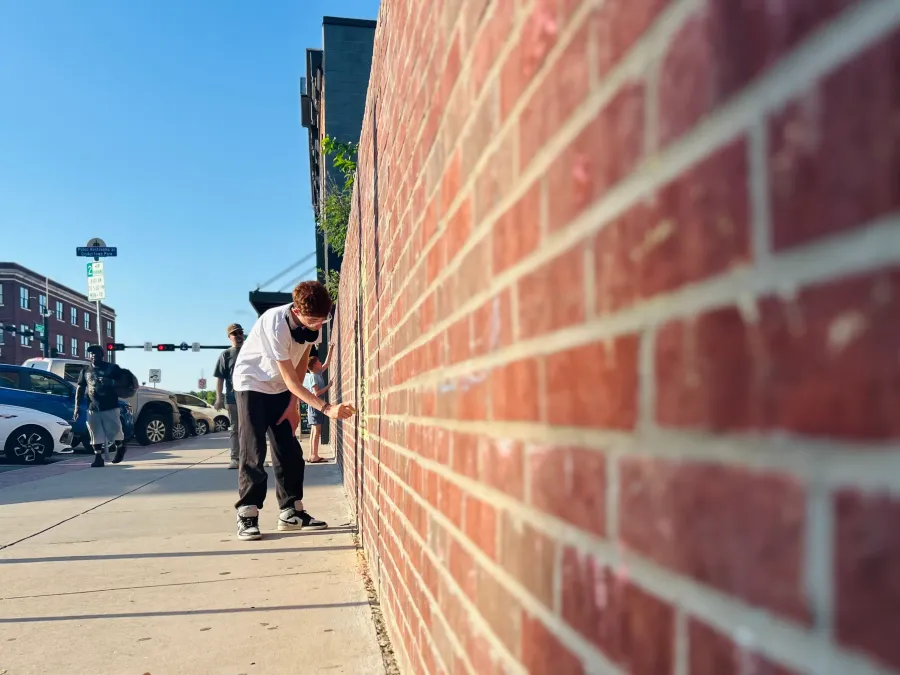
He started with a forgotten sign and a $5 box of chalk from a toy store on the square. Now, he’s holding the city accountable for a larger conversation — one chalk mark at a time.
“Don’t underestimate the power of small actions.”
Want to help find a new home for Denton’s chalk wall? Business owners with available wall space can reach out to the reporter at DNTN-NEWS@PROTON.ME.